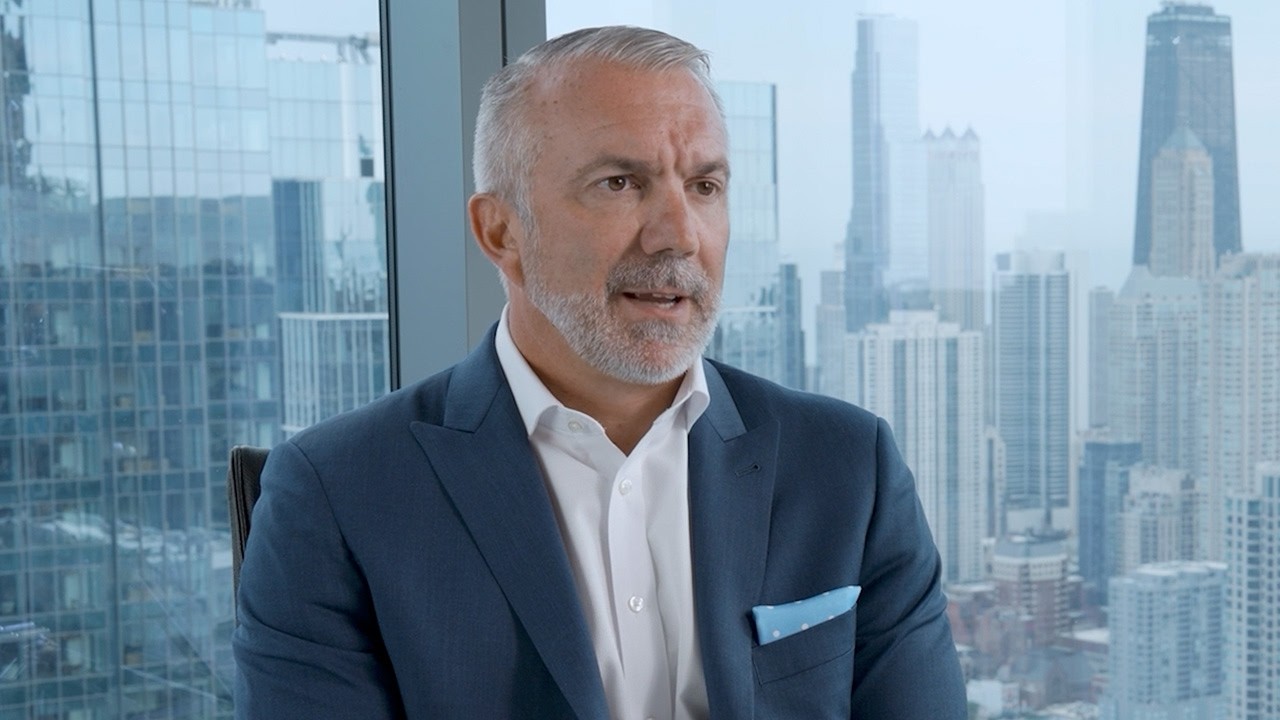
Jay: ETFs have exploded in the industry overall in terms of AUM and flows. If you look back, the ICI reported in 2015 just over $2 trillion in ETF AUM. That number at the end of 2025, a decade later, is almost $13.5 trillion. Now, mutual funds still make up about two-thirds of the long-term fund AUM in the industry, but the flows have been dominated by ETFs in the space. We have a long heritage of non-U.S. investing in developed and emerging markets, across equity and fixed income. They’re relatively underserved in the market for active ETFs. Morningstar shows in the foreign large growth there’s only 20 active ETFs in the space. For the emerging market debt category, there are only 12 active ETFs in the space. Our goal is to deliver our investment edge in a vehicle-agnostic way.
Simon: Well, the greatest opportunity is that growth is broadening all around the world, across sectors, across industries, regions. And after a period in which we had quite a low level of growth, we've now got a turbocharged element of growth. It's not just technology; it's in broader industries as well. Growth is everywhere. Now, a platform shift like AI tends to mean there's a lot of excitement around it, but actually, the portfolio [WBIE] has got exposure to lots of different growth areas—not just AI. It’s not just in one country; it’s not just in one region.
Todd: I think in the 30 years that I've done emerging markets, at this point, I see more pillars of growth within them than I ever had before. One of the themes that's really the most important globally in helping EMs is the weakness in the dollar. U.S. debt levels have gotten so high—we're about to hit $40 trillion—and the rest of the world is starting to get worried about this. These concerns may lead to a weaker dollar going forward, which would be a big benefit for emerging markets. This is really emerging markets 3.0. The industrial capacity that's required by the world is really almost solely located in emerging markets at this point.
Marcelo: Emerging markets fixed income is an asset class that is impacted by two predominant global forces: global growth and global liquidity conditions. And we believe that we now live in a very favorable environment for the asset class. The fundamental backdrop in emerging markets is now very solid, from an economic growth perspective, from a fiscal trajectory perspective, levels of debt are pretty much stable. Emerging market countries have been experiencing strong capital flows, which in turn have supported these countries’ external balances. The average experience in the team, the diversity of the team, our multi-site approach, where we have investment professionals based on three continents, in five locations, allows us to have a very in-depth focus on the asset class and also allows us to identify risks and identify opportunities.
Jay: What the ETF wrapper does change for investors is it provides transparency, liquidity, and potential tax mitigation. What the ETF wrapper does not change for investors is our investment approach, our investment philosophy, and our focus on deep fundamental research. This is a broader way to access our investment edge in the ETF wrapper. It is the same investment philosophy, the same approach—our long-standing heritage of non-U.S. investing, now available in an ETF wrapper.
Filmed October 2026
Please carefully consider the William Blair ETFs’ investment objectives, risks, charges, and expenses before investing. This and other information is contained in the Fund’s prospectus and summary prospectus, which you may obtain by calling 1-800-742-7272. Read the prospectus and summary prospectus carefully before investing. Investing includes the risk of loss.
The William Blair ETFs are distributed by William Blair & Company, L.L.C., member FINRA/SIPC.
The views and opinions expressed herein are those of the speaker(s) as of the date of publication, are subject to change without notice as economic and market conditions dictate, and may not reflect the views and opinions of other investment teams within William Blair. Factual information has been obtained from sources we believe to be reliable, but its accuracy, completeness, or interpretation cannot be guaranteed. This material may include estimates, outlooks, projections, and other forward-looking statements. Due to a variety of factors, actual events may differ significantly from those presented. This video has been provided for informational purposes only and should not be considered as investment advice or a recommendation of any particular strategy or investment product, or as an offer to buy or sell any securities or related financial instruments in any jurisdiction. Investment advice and recommendations can be provided only after careful consideration of an investor’s objectives, guidelines, and restrictions.
Investing involves risks, including the possible loss of principal. Equity securities may decline in value due to both real and perceived general market, economic, and industry conditions. Investing in foreign denominated and/or domiciled securities may involve heightened risk due to currency fluctuations, and economic and political risks. These risks may be enhanced in emerging and frontier markets. Investing in the bond market is subject to certain risks including market, interest rate, issuer, credit, and inflation risk. High-yield, lower-rated securities involve greater risk than higher-rated securities; portfolios that invest in them may be subject to greater levels of credit and liquidity risk than portfolios that do not. Diversification does not ensure against loss. Past performance is not indicative of future returns.
ETF shares are bought and sold on an exchange at market prices rather than NAV and may trade at a premium or discount to NAV. Investors may pay more than NAV when buying shares and receive less than NAV when selling shares. Brokerage commissions and other trading costs may reduce returns. Shares of the ETFs are not redeemable with the ETF other than in creation unit aggregations. There can be no assurance that an active trading market for the ETF’s shares will develop or be maintained. Tax-efficient investing does not eliminate taxes. Investors may incur taxes when buying or selling ETF shares, and tax treatment varies based on individual circumstances. Consult a tax professional regarding your specific situation.
Copyright © 2026 William Blair. “William Blair” refers to William Blair & Company, L.L.C., William Blair Investment Management, LLC, and affiliates. William Blair is a registered trademark of William Blair & Company, L.L.C.