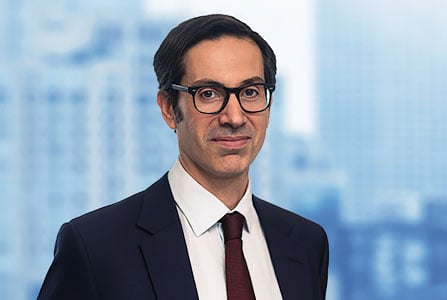
Hugo Scott-Gall: Joining me today is Marcelo Assalin, a partner and portfolio manager here at William Blair. Marcelo leads our emerging markets debt team and brings more than three decades of experience investing across some of the world’s most complex markets. From growing up in Brazil to navigating multiple EM cycles when he was based in the U.S., and now Europe, Marcelo’s perspective on risk, opportunity, and change, is deeply shaped by his lived experience. Today we’re gonna dig into how his approach has evolved, how the EMD – the emerging markets debt – asset class has matured and where he’s finding conviction in, let’s face it, a world that’s getting more complicated. Marcelo, it is great to have you on the show. Welcome.
Marcelo Assalin: Thank you very much, Hugo. It’s a great pleasure; I’m a big fan of your podcasts and it’s an honor to be here with you today. Thank you.
Hugo Scott-Gall: Brilliant. Well, let’s get going. We need to start in rural Brazil. You’ve been investing in EM for more than 30 years. So, two big questions – how have you changed as an investor in that time – going all the way back to when, no doubt, you were daydreaming in rural Brazil, thinking about what am I gonna do when I grow up? And how has EM changed in that time?
Marcelo Assalin: Yes, well, very good questions. I will start with the second question, how it was growing up in Brazil. Brazil, well, first of all, it was, at times, scary, right? As you can imagine, such an unstable place back then. But also very exciting. So, Brazil –growing up, I have been pretty much through all the crises you can imagine, right? Brazil has been through debt crisis, currency crisis, financial crisis, political crisis, and president impeachments.
There was an energy crisis that was very interesting and particularly painful, in the beginning of the 2000’s. But it was an evolving place, right? And especially between the transition from the military regime into a democracy. It was a very fascinating period. But I believe that the instability of the country back then, and the experience of growing up through all these situations, built a lot of resilience in the way I see emerging market countries, the way I see risks in emerging market countries, and how I approach investment management. When I started – and now going back to your first question – it’s interesting because I started my career in the beginning of the ‘90s, in Brazil – 1994. EMD was just starting.
EMD started from the securitization of defaulted, predominately commercial loans, that happened in the late 80’s. And under the Brady Plan – named after the U.S. Secretary of the Treasury, Nicholas Brady – there was this restructuring process that allowed the asset class to be born. In the beginning, when I started, there were, I think, 10, 12 countries in the universe. There were 30 bonds, right? I can fit all the bonds on my notepad. I used to register the price of the bonds on a daily basis, manually. And today, the universe spans over almost 100 countries. Over 900 issuers, issuing thousands of bonds, in EMD local currencies, in hard currency denominated securities. So, it evolved dramatically.
It was a very niche investment universe, and today it’s a mainstream fixed income asset class.
Hugo Scott-Gall: When you think about how you invest, obviously the maturing of the asset class brings with it better information, better access. Do you think the skills of what makes a good investor in EM are the same now as they were when you started? Or actually is it really quite different?
Marcelo Assalin: No, it evolved, as well, right? Especially, well, considering that the EM universe has a high incidence of idiosyncratic risks. It’s a very large universe and there’s always something happening, right, in some part of the world. Therefore, it’s important to approach the asset class with a very strong focus on diversification.
And this is the backbone of my fundamental belief when it comes to investing in emerging market stat. Do not concentrate too much in few places. In the beginning, it was not possible, because there were only two handfuls of countries where we could invest not many securities. But today, we can diversify the portfolio. We can reduce the exposure to specific risk factors and avoid concentration. And that’s, in our opinion, critical to achieve long-term consistency and success in this asset class. Diversification.
Hugo Scott-Gall: I wanna talk some more about that – you as an investor and how you actually invest today – but let’s do a definition first. So, you’re the head of our EMD team, or emerging market debt team – can you just kind of define what that means? Within that EMD umbrella, what were the different products?
Marcelo Assalin: Yeah, so, starting with what’s EMD. Basically, securities, fixed income securities, bonds, issued by EM countries, right? Sovereign debt companies based in EM countries, right? Corporate debt. These securities can be issued in hard currencies, right? Predominantly in U.S. dollars, they are predominantly U.S. dollar denominated. But more and more so, also issued in emerging market countries’ own currencies. We call it local currencies. So, it’s a very, very wide universe.
To give an idea, I mentioned almost 100 countries now in our investment universe. Spanning over 900 issuers, right? If you include all the different issuers that issue in this space and the combined market capitalization, and we look at the different indices we track, it’s over $5 trillion U.S.D. So, it’s diversified, it’s sizeable, it’s liquid, and it’s evolving. Every year we have new countries entering the market, right? One specific area that we are excited about is what we call the frontier markets countries – countries that are opening up for international investors, like ourselves, where we have been able to uncover very attractive opportunities.
Hugo Scott-Gall: So, how do you categorize, how do you create a taxonomy for all the different emerging markets, all the different countries you look at? Do you try and organize into similar characteristics? Whether that is size, maturity, the type of economy, the key drivers of an economy – how do you start with, “Well, I’m going to invest in emerging markets debt securities.” What do you do next?
Marcelo Assalin: Sure. So, the conventional approach in the marketplace is to look into the asset class through the regional lenses, right? Looking at Latin America, how we position in Latin America, what’s the optimal security selection in Latin America? We believe that is not an optimal approach, right? Because, within a region, you have very different countries, from a risk profile point of view. Let’s take, for example, Latin America – Argentina – and compare it with a neighboring country like Chile, right? These are totally different. They provide totally different investment opportunities and risks to investors. We prefer to segment the investment universe through different risk buckets. Depending, predominantly, on the volatility of each country.
So, we created what we call the high beta group of countries, medium beta group of countries, and low beta group of countries. Why do we do that? Because that allows us to compare countries more efficiently. It allows us to manage risks more efficiently, as well, and position the portfolios more aligned with our overall top-down views of the asset class.
Hugo Scott-Gall: So, a few years ago I was lucky enough to meet one of the authors of a book called Why Do Nations Fail? This is Professor James Robinson of Harvard, and he wrote it with Professor Acemoglu. And it was, I think, quite influential in, what is it that make countries succeed, and why do they fail? And their answer was, you’ve got to have strong institutions, strong institutional framework.
So, when you’re assessing countries, what is it you’re looking at? What is it you’re trying to say? ‘Cause presumably, you wanna buy the debt of countries that are going to do better in the future, rather than do worse. It’s not just that – it’s how securities are valued, of course. But what is the secret sauce of success with EM countries which, over time, reward their investors?
Marcelo Assalin: This is a very good question. And I’m very familiar with the book; it’s a very popular book within our EMD team. So, basically, when we look at a country, we need to assess two things. The ability of the countries to pay back, right? And we do that, basically, through the analysis of macroeconomic factors. Are these countries generating enough dollars to pay back their dollar denominated liabilities, right? Are they growing? How are fiscal dynamics taking place?
How those dynamics are impacting the level of debt. So, external accounts, which is very important. So, that’s the conventional macroeconomic fundamental approach. But the other risk is not the ability to pay but the willingness to pay, right? Some countries decide to default, even when they have the ability to pay. Usually it’s driven by political risk. For that, we have a very strong focus on governance anywhere, absolutely correct. One thing that has, over the years, improved significantly within the EMD universe is the institutional framework, right? Many countries who went through a hard time had the technical advice and support from multilateral organizations to implement structural reforms that enable them to improve their governance in the end of the day. And that’s a very important piece of our analytical framework, to assess governance.
To assess the institutional framework and assess whether a country’s institutional framework is improving, deteriorating, and the risks associated to investing in those places.
Hugo Scott-Gall: So, you would argue – so, I’m gonna ask you two questions now. You would argue it’s very important to go and visit these countries. Second question is, how many countries in EM have you visited?
Marcelo Assalin: Oh, that’s a very good – oh, first of all, it’s very important. It’s critical. Especially places which are now more on the more frontier part of the market. These new countries coming to the market, opening up doors for international investors. Information is still not widely available, right? Not very transparent, in many cases. So, it’s important to go there, to talk to local investors, local government officials, to have a better understanding of what’s happening on the ground.
And we do that very, very frequently. I don’t do that as often as I would like. My team members, who are mostly focused on research, they do that very, very frequently. They are always traveling. Myself – we have a competition going within the team, and unfortunately I’m lagging there, because I’m still in the 70s, right? I have colleagues that already above 100. So, yeah, so it’s many places over the years.
Hugo Scott-Gall: I won’t ask you how many hairy or sticky situations you’ve been in. But I guess you do have to be – you can’t be naïve. You need to be quite street smart, visiting these countries. I don’t just mean making sure you don’t get into the wrong cab at the airport, I mean understanding that not everyone always tells the truth, but sometimes people paint a rosier picture ‘cause they want your dollars. Is that fair?
Marcelo Assalin: Yeah, it’s fair. And I will share an experience with you.
Back in 1995, I was a securities trader at the trading desk of an investment bank in Brazil, in Sao Paulo. That’s where I started my career. And back then, we used to trade – and I used to trade – bearer bonds. You know what bearer bonds are?
Hugo Scott-Gall: Yep.
Marcelo Assalin: So, whoever has the physical possession of the bonds, they own the bonds, right? And we used to trade these. These bonds came from the agrarian reform in Brazil the government was paying landowners with these bonds. And then, a secondary market was created. And I happened to be a trader of those bonds, back in the day. There was one situation that I sold the bonds to an investor in Rio, right? And there was no one to fly to Rio to deliver the bonds. So, I had to take an airplane in Sao Paulo, fly to Rio with a suitcase worth millions of dollars in bearer bonds to be delivered.
So, when you go through a situation like that, as I was saying, you build resilience. You are very much aware of the risks you take. Yes, and then, throughout the years, I have come close to some specific situations that required attention. But I have to confess that I have been lucky, right? I managed to escape those more unsafe, hairy situations.
Hugo Scott-Gall: Good thing that you did. So, it’s easy to invest when it’s all great and nice and shiny and working well. But a lot of the situations you’re looking at, potential investments or actual investments, are…I guess for want of a better word, messy. But potentially very rewarding. How do you think about those?
Marcelo Assalin: Good question. Because one thing that we do very well within the team is to navigate the distressed space in EM. There are a lot of opportunities there. Not so much these days, because there are very, very few countries in that distressed universe right now. But just a few years back, there were half a dozen countries trading at distressed level. And there are risks associated to investing into a country that is not performing. But there are also opportunities, right?
Why is that? So, if you look at EM sovereign debt, and you go back 30 years in time, you will see that average recovery values in situations of default have been around $0.55 on the dollar, right? And usually, when a country runs into problems and decides to stop paying, bond prices drop dramatically. Because many clients cannot yet continue to get involved. They need to sell bonds. And you normally see bonds fall into the low 20s – $0.20 on a dollar, right? There are opportunities. The question mark is, first, how friendly will be the restructuring process to investors, to bondholders? And how long it will take. Ukraine, back in 2015, was very quick, and recovery values were very high, was very friendly to investors. Argentina took over a decade. So, it’s a function of where you invest.
Where you buy the bonds, what the restructuring prices will be in the end, and the time it will take. But in most places, we see opportunities, not risks. And we don’t shy away from navigating that space.
Hugo Scott-Gall: A good example of that, I think, is Venezuela, where you were invested…I’m not sure about how long you were invested, but you were certainly invested going into this year. And that has been a good place, has been a nice contributor, I think, for you this year. But Venezuela is a place that still has plenty of risk attached to it but had an awful lot of risk attached before. That was not a performing economy, with the regime, that was not likely to be a good steward of capital.
Marcelo Assalin: Yeah, no, absolutely. But back when we invested in those bonds, they were trading at around $0.10 on a dollar. And we were very, I would say skeptical, about the timeline for any potential restructuring there.
But at $0.10 on a dollar, there is a huge upside. And we decided to accumulate some bonds in the portfolio, and fortunately received this process being expedited by the recent events there involving the U.S. and the capture of President Maduro. Which opened an opportunity window for a restructuring process to take place sooner. What happens is that bond prices skyrocket, right? And now are trading in an area where investors should be less, I would say excited, because, as you mentioned, risks are still there.
Hugo Scott-Gall: Yeah. And I think that’s a very different type of investing. It’s a very different type of investing, certainly, from the portfolios I run, where you’re not buying anything at the equivalent of $0.10 on the dollar. But everything is about what you pay and the risk that you’re taking on versus the return you could get.
So, if we step back a bit now and say, let’s talk about how you see the world and where you’re invested, is it fair to say that emerging markets today – and at the time of recording, we’re in, the Iran conflict is raging with a consequent impact on energy prices. But emerging markets in aggregate have matured and have reduced their, say, sensitivity or dependence on the U.S. economy. That they had a crisis in some places in 1998, and since then, they’ve run themselves differently, better. Their central banks have more credibility. And as a result, the economies can stand on their own two feet better than they could before.
So, my question, really, is do you see this maturing of emerging markets countries in aggregate that means it’s a more compelling asset class? Whether that’s equity or debt, because of that greater economic maturity – better run, better governance. Is that a fair overall summary?
Marcelo Assalin: It is. And I strongly believe in that idea. So, I’ll give you an example. Today, throughout this Middle East crisis, credit spreads are better behaved in EM than in DM credit, right? EM currencies are outperforming DM currencies, while the dollar goes higher. And local interest rates in EM have adjusted less than what we’ve seen in developed economies. So, that for me shows how resilient the asset class became, from a fundamental point of view. Because growth has been quite resilient.
Even in the last year, for example, when we saw U.S. tariffs going higher, everybody was concerned about global trade, global growth. And EM did just fine, right? Today, EM is predominantly trading within EM, right? It’s over 50% of the EM trades today, is that intra-EM. Growth has been very, as I mentioned, resilient. Fiscal dynamics are stable. That has stabilized at much lower levels than the overall levels of that we see in advanced economies, right? EM countries are experiencing a surplus of dollars, very strong balance of payments. So, the EM risk metrics have improved quite significantly. So, we are not surprised about the resilience of EM assets at this point in time. And again, that idea that EM was a commodity play – that is old-fashioned, right?
So, EM has become not only diversified in terms of number of countries, but in terms of different business and economic models. Of course, raw materials are still important. But today, you have very important fintech sector in Latin America, for example, where companies are expanding in the region. And some are even entering the U.S. market, right? You have telecom companies in Africa crossing over into the fintech and financial sector. Allowing a very underbanked population, a very large underbanked population, to have access to financial products. So, you know better than I do the story about the tech companies in Asia. It’s a very powerful story. So, again, EM has become way more diversified, and therefore less dependent on advanced economies.
At the same time, Hugo, there is this disconnect and misconception about risks and perception of risk when it comes to emerging markets debt.
Hugo Scott-Gall: You can’t talk about EM without talking about China. How important is China to the asset class, but how important is China in terms of who is able to grow, given that China is very successful in certain industries that are strategic to it, and is exporting industrial capacity to the rest of the world. And that standard development model of agriculture, manufacturing, services. Well, China is so good at manufacturing, it makes it difficult for others to gain share.
Marcelo Assalin: Yeah. No, excellent question. And I think we need to separate it – the answer needs to be separated in two.
China remains critical from a financial and commercial trade link to the rest of the EM world. It’s the biggest EM country and the biggest trading partner of most EM countries. We need to separate that from how China’s important from an investment point of view, in emerging markets debt. China is a very large country, but it’s a highly rated country, as well. Where interest rates are very low, credit spreads are very low, right? And it’s not an attractive investment destination for EM fixed income investors. We have better stories, more compelling valuations, elsewhere. Regarding the growth and trade links – I think, again, this year and last year, and the previous years, actually, have provided a lot of comfort that, while China is slowing down, the EM world continues to grow.
So, the links are there, but I think the dependence tends to be overestimated.
Hugo Scott-Gall: When you look at somewhere like India, which has a population of a similar size to China – can they both be successful, for example? And if they are both successful, does that leave enough opportunity for the rest of EM? Is there crowding out by the two big guys?
Marcelo Assalin: They have very different economic models, right? China has been more export oriented. India has been more domestic demand driven. So, in some sense, they tend to complement each other. So, I don’t see the combination of the two cannibalizing other opportunities that other emerging market countries may eventually have in the world space.
Hugo Scott-Gall: So, when you think about where you’re invested now or where you think you have strong views that might surprise, where do you see strong and improving relative economic performance across the opportunity set?
Marcelo Assalin: Good point. We are now very excited about some stories within the frontier space, as I was talking about before. Countries that are opening up for international investors that, where the risk premium, in our opinion, is very attractive and offsets risks. I would say – India, for example, opened up to fixed income investors a couple of years ago, right? Saw massive inflows during that process. There are other important EM countries in the process of opening up.
Like Egypt or Nigeria, for example. But we are particularly excited about the smaller countries entering the space. A few countries in Latin America, Central America, and the Caribbean, for example. Like Dominican Republic, like Jamaica, like Panama, Costa Rica. Or in Latin America, in South America, like Paraguay, Uruguay – all new investment destinations, right? In elsewhere, we have sub-Saharan countries like Zambia, Ghana. You have the ‘stans, right? Kazakhstan, Uzbekistan, that are recently open to investors. Places in Asia like Sri Lanka, for example, who came from a successful debt restructuring process – an IMF engagement that allowed the country to implement reforms. So, there’s so many stories out there, and in most of these places we have a combination of very attractively priced currencies, right?
And very high levels of interest rates domestically. So, we think that this group of countries will become the next main thing in the EM debt space.
Hugo Scott-Gall: And whether the world is unipolar – which it isn’t – or multipolar, whether there’s the global economic order or disorder. Is it a misconception, actually, that all those things really matter for EM? Is the misconception that, actually, lots of EM countries can survive and thrive whether we’re multipolar, unipolar, whether we’ve got big changes to global economic order or not. They’re actually pretty resilient, and pretty different, and have more of their fates in their own hands than perhaps is realized.
Marcelo Assalin: I think so. I think so. In any situation, there are winners and losers, right? Of course, right now, GCC countries are being impacted by the war in the Middle East.
At the same time, you have other countries that are in different geographies benefitting from the conflict as energy prices rise. So, in such a diversified universe, there will always be opportunity, because there will always be winners and losers, right? But overall, I believe in this story that the global south has remained more resilient as they grow together and they reduce dependencies on advanced economies.
Hugo Scott-Gall: So, let’s go back to your EMD product. What role does an EMD portfolio play in an asset allocation’s overall portfolio? How is EM fixed income different from fixed income overall? And if I buy EMD, am I getting equity-type risk on a fixed income product or is that a misperception?
Marcelo Assalin: Yeah, so, basically, EMD tends to have higher yields, driven by this disconnect between risks and perception of risks that we were talking about. So, it offers potential for higher returns over time, as we have seen over the many years. And those strong returns tend to compensate for the slightly higher volatility of the asset class. But it also allows investors to diversify their portfolios. Not only in terms of number of different countries, but also the ability to diversify away from dollar denominated and Euro dominated securities that tend to be highly correlated with the other investments there. So, it’s basically opportunities for higher returns with somewhat limited volatility, but also with more diversification.
Going back to the long-term default rates in EMD, especially in EMD sovereign credit, they tend to be half of those we see in developed market corporate credit. And recovery values are much higher. So, again, going back to that disconnect, right? And we are seeing that now. And I believe you are seeing that as well in the equity space, when more investors – especially U.S. based investors – are starting to look more at global equities and EM equities. Again, it’s because of the diversification potential. We are seeing that in EM, that taking place as well.
Hugo Scott-Gall: We started off with you’ve done this for 30 years, and I think you’re gonna say yes to this question, which is, when you look back over 30 years and think ahead – and it’s very difficult to think ahead – at the moment, given there’s so many things happening in the world and so many things that have happened in this year alone.
Next five years – I’m guessing you’re going to say yes – would be right up there, opportunity set wise? Versus this last 30 years, from what you do? Am I overstating?
Marcelo Assalin: I believe that things will improve over the next five years, vis a vis where we are today. Of course, there are always risks and we need to manage risks very well. I’ll give you an example. I remember, back in 2002, in the runup to the presidential elections in Brazil, when Lula, Brazil’s first leftist president was elected, there was so much concern that the cost to insure against credit default in Brazil, measured by the CDS market, spiked to four thousand basis points in October 2022.
And I remember seeing that on my Bloomberg screen, right? Four thousand basis points. But by the time Lula left the government, in the end of his first term, the same contract was priced at below 150 basis points, right? So, that taught me a lot about not to panic, about how to separate noise from facts. Because, if you look at this asset class, over the past 30 years, there were only four episodes when our index, for example, went down more than 10%. And in all those episodes, within a year, it recovered back to one of the all-time highs.
So, what I’m trying to say is that investors should look through noise, through volatility, because this asset class offers significant value. And going forward, because how I see fundamentals evolving, I believe this is more true than ever.
Hugo Scott-Gall: Okay, that’s great. So, Marcelo, thank you very much for coming on the show.
Thank you very much for talking us through both your view of emerging markets over time, explaining what EMD is, and explaining why you’ve got such an optimistic outlook for the next five years – which will be more than 35 years in the business.
Marcelo Assalin: Thank you, thank you. As I said, it’s a pleasure and honor to be here. Thank you.
This content is for informational and educational purposes only, and is not intended as investment advice or a recommendation to buy or sell any security or to adopt any investment strategy. Investment advice and recommendations can be provided only after careful consideration of investors’ objectives, guidelines, and restrictions. The views and opinions expressed are those of the speakers as of the date of this recording. Are subject to change without notice as economic and market conditions dictate and may not reflect the views and opinions of other investment teams within William Blair Investment Management.
Factual information has been obtained from sources we believe to be reliable, but its accuracy, completeness, or interpretation cannot be guaranteed. Any discussion of particular topics is not meant to be comprehensive and may be subject to change. This material may include forecasts, estimates, outlooks, projections, and other forward-looking statements. Due to a variety of factors, actual events may differ significantly from those presented.
Past performance is not indicative of future results. Investing involves risk, including the possible loss of principal. Any investment or strategy mentioned herein may not be suitable for every investor. References to specific companies are for illustrative purposes only and should not be construed as investment advice or a recommendation to buy or sell any security. William Blair Investment Management may or may not own any securities of the companies referenced. It should not be assumed that any investment in the companies referenced was or will be profitable.