December 15, 2025 | Global Equity
Where Is Growth? Just Ask The Youth

Global Equity Director of Research, Portfolio Manager
December 15, 2025 | Global Equity
Global Equity Director of Research, Portfolio Manager
View Fund:
https://im.williamblair.com/investments/mutual-funds/wbeix-emerging-markets-growth-fund
View Fund:
https://im.williamblair.com/investments/mutual-funds/wbelx-emerging-markets-leaders-fund
View Fund:
https://im.williamblair.com/investments/mutual-funds/wgfix-global-leaders-fund
View Fund:
https://im.williamblair.com/investments/sicav-funds/lu0995405320-emerging-markets-growth-fund

We are witnessing a shift in market influence from one generation to the next. As millennials and Gen Z gain purchasing power, shape digital norms, and set cultural direction, they are redefining what growth looks like across industries.
To better understand the scale and implications of these shifts, a group of our global equity team associates who fit within the relevant demographic led a session exploring how younger generations are influencing demand, business models, and platform economics.
Their work highlights that companies able to understand and adapt to these behavioral changes early appear to be positioned to lead the next cycle of growth.
Equally important was how the work was generated. The session reflected the strength of our research culture: collaborative inquiry, generational perspective, and a willingness to examine emerging behaviors before they fully register in market fundamentals. That mindset—curious, connected, and forward-looking—remains central to how we identify growth early and maintain an edge in a rapidly evolving environment.
Together, the research and the process surfaced a clear message: growth is shifting, and the signals are already visible for those willing to look ahead. Below we discuss five insights that stood out. But first, why focus on these new demographics?
Millennials and Gen Z now account for more than half the global population, and their economic impact is rising rapidly. Our team’s analysis estimates a $24 trillion total addressable market (TAM) of spending power for these cohorts, compounding at 6% annually to reach $43 trillion in the next decade; this is double the rate of the broader market.
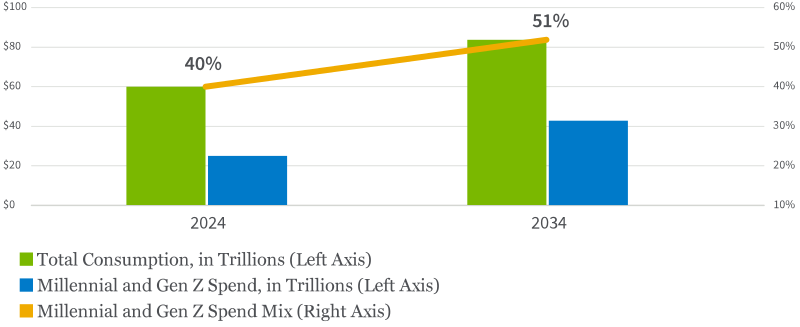
Sources: Statista and William Blair, as of November 2025. CAGR refers to compound annual growth rate.
But it’s not just about numbers. These generations are fundamentally different. Gen Z, born after 1997, is the first truly digital-native cohort. The members of this generation have life experiences shaped by ubiquitous technology, social media, and a rapidly changing world. Millennials, meanwhile, have come of age amid globalization, economic liberalization, and the rise of the middle class. We believe companies must win over these cohorts early to secure enduring growth.
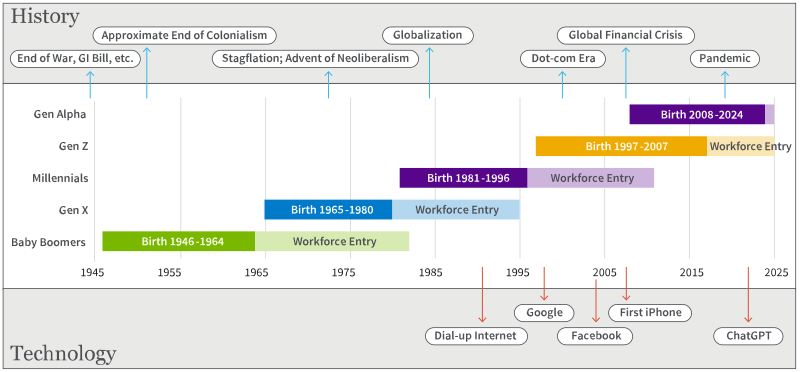
Source: William Blair, as of December 2025.
Our associates’ discussion surfaced several themes that help explain how younger generations are reshaping markets and influencing where growth is emerging. While the shifts are broad, five areas stood out as particularly meaningful for understanding demand patterns, platform evolution, and future investment opportunity.
Gen Z’s consumption habits defy easy generalization. While this generation is often characterized as favoring experiences over goods, our research shows they spend more on both than previous cohorts. For example, travel and entertainment are strong areas of discretionary spend (10% to 30% share of wallet, according to Bank of America and William Blair), but so are goods and services. Alcohol consumption patterns, too, are nuanced; this generation has fewer occasions to drink, but when they do drink, they consume higher-quality alcohol.
Brand loyalty is evolving rather than disappearing. Younger consumers are less influenced by traditional mass-market brands and more responsive to niche, identity-based and experience-driven offerings. Digital discovery, creator influence, and algorithmic personalization mean loyalty is increasingly earned through relevance, community, and repeat value—not legacy recognition. At the same time, brands built on strong intellectual property, cultural resonance, or immersive engagement are strengthening as younger generations gravitate toward franchises, creators, and products that reflect identity and participation rather than passive consumption.
These generations’ consumption patterns are more measurable.
While these generations are more diverse than prior generations, thanks to data tracking, their consumption patterns are more measurable. Brands now can target niche audiences with unprecedented precision.
The implication for investors is clear: growth opportunities lie in companies that can adapt to granular, data-driven segmentation and deliver both experiences and products that resonate with evolving values.
Millennials entered the workforce during the global financial crisis, driving a “save-to-escape” mentality. Gen Z, by contrast, is shaped by uncertainty, volatility, and choice overload. They prioritize lifestyle and flexibility, invest earlier, and are open to alternative products, crypto, and tokenization. However, they face higher financial illiteracy.
Social media is a primary source of financial advice for Gen Z, with platforms such as TikTok and YouTube influencing over 40% of investment decisions, according to MarketWatch. Robo-advisors and AI-driven wealth management are gaining traction, but Gen Z seeks holistic, low-cost, personalized solutions that integrate investing, insurance, and tax advice into a single interface. And 80% of Gen Z looks for the lowest-cost financial services offerings, according to RFI Global.
Driven by these cohorts, the future may bring always-on digital agents akin to personal CFOs optimizing finances in real time (leveraging blockchain) and programmable money. Investors should watch for companies innovating in financial technology, especially those bridging fragmentation and delivering seamless user experiences.
Gen Z is the last screen-native and first AI-native generation. They own an average of 10 technology products, use 5 daily, and spend 7 hours online. [1]
It makes sense, then, that the creator economy is booming, with 50 million monetizing influencers worldwide, almost half of whom are Gen Z. Brand spend is shifting toward content creators, and 60% of Gen Z users prefer product recommendations from influencers [2], who are who are sometimes trusted more than family and friends.
Social platforms have shifted from relationships to entertainment and commerce.
However, social platforms have shifted from relationships to entertainment and commerce. The feed is no longer a reflection of who someone knows, but what the algorithm believes will hold the viewer’s attention or trigger a transaction. As a result, younger users are disengaging from performative, public-facing formats and gravitating toward smaller, quieter digital spaces that feel safer, less curated, and more human. This is driving the rise of “cozy media” formats (lo-fi content, slower pacing, softer aesthetics), closed-group or invitation-only communities, and ambient computing interactions where the platform fades into the background and content becomes passive, continuous, and low-friction.
Meanwhile, Gen Z is a key driver of AI adoption, using tools for content creation, social interaction, and product discovery. TAMs for AI tools range from $3 billion to more than $50 billion, according to William Blair estimates. The next wave of devices (ambient, wearable, and conversational) could further broaden data tracking and consumer targeting.
Investors seeking to take advantage of this area of growth may want to look for companies at the intersection of technology, media, and commerce, especially those enabling new forms of engagement and monetization.
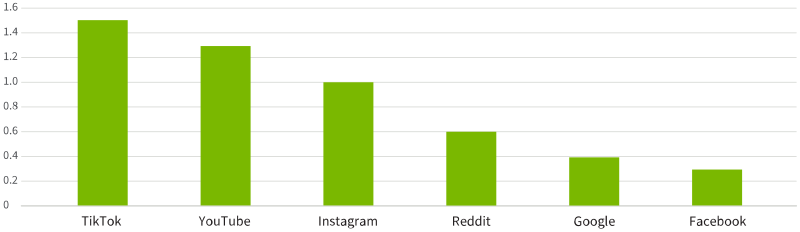
Sources: SQ magazine, WARC, Forbes, eMarketer.com, IMH Business, and William Blair, as of November 2025.
Wellness is shifting from discretionary purchases to ongoing, integrated behavior—something closer to maintenance than indulgence. Younger demographics, in particular, view physical, mental, and emotional health as continuous states requiring calibration rather than episodic correction.
This mindset is accelerating demand for products and services that support daily wellness routines, including sleep tracking, hormone and metabolic testing, supplements, mindfulness tools, and movement-as-habit rather than gym memberships alone.
At the same time, technology is reshaping wellness from reactive to proactive. Digital diagnostics, personalized insights, and AI-enabled recommendations are making individualized care—once reserved for elite or clinical environments—accessible at scale. Wearables, biometric monitoring, and habit-shaping software are becoming part of personal operating systems rather than standalone products.
Younger generations share routines, products, and progress as part of personal identity.
Lastly, wellness is increasingly social, culturally embedded, and aspirational. Younger generations share routines, products, and progress as part of personal identity, blurring wellness with lifestyle, fashion, and status signaling. This fuels rapid brand cycles in areas such as supplements, skincare, nutrition protocols, athletic apparel, and therapeutics—but also strengthens the position of platforms and ecosystems that can anchor long-term behavior.
Combined with the willingness to spend—which appears less tied to income level and more to perceived necessity and identity—these behavioral changes are resulting in predictable recurring spending patterns, creating long-term data-driven engagement loops. And with the TAM for wellness expanding from birth to death, we see opportunities for companies that can deliver integrated solutions.

Source: William Blair, as of December 2025.
Emerging markets (EMs) are advancing through technology cycles differently from developed markets—not by replicating old infrastructure, but by leapfrogging it. The combination of cheap bandwidth, widespread smartphone access, and seamless digital payments has created a powerful foundation for rapid digital adoption.
This convergence, often described as the “Wang Trifecta,” has enabled youth in EMs to embrace new digital behaviors faster than their counterparts in developed markets. As a result, these markets are not playing catch-up; they are setting cultural and commercial precedents that increasingly influence global trends.
This shift is visible in the rise of super-app ecosystems, where messaging, payments, commerce, mobility, entertainment, and financial services coexist in a single platform. WeChat, Gojek, Grab, and UPI-enabled ecosystems in India demonstrate how integrated digital rails can scale when the infrastructure, consumer behavior, and regulatory environment align.
Younger users in EMs also treat these platforms not just as utilities but as identity hubs: places where social interaction, commerce, content, and community blend seamlessly. Younger cohorts in EMs are not merely consumers of global digital culture; they are originators, exporting trends in music, beauty, gaming, and creator-driven content.
While appetite for similar integrated platforms exists in developed markets, regulatory environments, entrenched corporate silos, and antitrust frameworks constrain convergence. And platform boundaries (app stores, data ownership, payments regulation) make it difficult to build unified ecosystems at scale.
However, AI may begin to collapse some of these barriers by enabling orchestration across apps rather than consolidation within one. For investors, the opportunity is twofold: EMs offer live testing grounds for scalable digital models, and developed markets warrant monitoring for regulatory inflection points that could unlock similar platform dynamics.
Our analysts’ discussion underscored several critical themes for investors:
Importantly, the discussion made clear that youth-driven behavioral and technological shifts are creating new engines of growth across sectors. From digital consumption and financial experimentation to wellness and platform innovation, the patterns shaping Gen Z and millennial behavior are durable and increasingly investable.
We believe positioning portfolios to capture these currents—across consumer technology, financial platforms, wellness ecosystems, and the creator economy—will be critical in the future as these cohorts become the dominant global economic force.
Paul Birchenough, partner, is director of research and a portfolio manager on William Blair’s global equity team.
[1] For 10 products, CTA, PYMNTS, and William Blair. For 5 daily, CTA and William Blair estimates. For 7 hours online, New York Post. [2] Sources: Grin, Allied Global Marketing, Simplicity, and William Blair.
View Fund:
https://im.williamblair.com/investments/sicav-funds/lu0995405593-emerging-markets-leaders-fund
View Fund:
https://im.williamblair.com/investments/sicav-funds/lu0995405759-global-leaders-fund
View Strategy:
https://im.williamblair.com/investments/separate-accounts/emerging-markets-growth
View Strategy:
https://im.williamblair.com/investments/separate-accounts/emerging-markets-leaders
View Strategy:
https://im.williamblair.com/investments/separate-accounts/global-leaders
Want the latest insights on the economy and other forces shaping the investment landscape?
Subscribe to our Investing Insights newsletter.
Any investment or strategy mentioned herein may not be appropriate for every investor. There can be no assurance that investment objectives will be met. Products and services listed are available only to residents of this jurisdiction and may only be available to certain categories of investors. The information on this website does not constitute an offer for products or services, or a solicitation of an offer to any persons outside of this jurisdiction who are prohibited from receiving such information under applicable laws and regulations. Nothing on this webpage should be construed as advice and is therefore not a recommendation to buy or sell shares.
Please carefully consider the William Blair Funds’ investment objectives, risks, charges, and expenses before investing. This and other information is contained in the Funds’ prospectus and summary prospectus, which you may obtain by calling 1-800-742-7272. Read the prospectus and summary prospectus carefully before investing. Investing includes the risk of loss.
The William Blair Funds are distributed by William Blair & Company, L.L.C., member FINRA/SIPC.
The William Blair SICAV is a Luxembourg investment company with variable capital registered with the Commission de Surveillance du Secteur Financier (“CSSF”) which qualifies as an undertaking for collective investment in transferable securities (“UCITS”). The Management Company of the SICAV has appointed William Blair Investment Management, LLC as the investment manager for the fund.
Please carefully consider the investment objectives, risks, charges, and expenses of the William Blair SICAV. This and other important information is contained in the prospectus and Key Investor Information Document (KIID). Read these documents carefully before investing. The information contained on this website is not a substitute for those documents or for professional external advice.
Information and opinions expressed are those of the authors and may not reflect the opinions of other investment teams within William Blair Investment Management, LLC, or affiliates. Factual information has been taken from sources we believe to be reliable, but its accuracy, completeness or interpretation cannot be guaranteed. Information is current as of the date appearing in this material only and subject to change without notice. Statements concerning financial market trends are based on current market conditions, which will fluctuate. This material may include estimates, outlooks, projections, and other forward-looking statements. Due to a variety of factors, actual events may differ significantly from those presented.
Investing involves risks, including the possible loss of principal. Equity securities may decline in value due to both real and perceived general market, economic, and industry conditions. The securities of smaller companies may be more volatile and less liquid than securities of larger companies. Investing in foreign denominated and/or domiciled securities may involve heightened risk due to currency fluctuations, and economic and political risks. These risks may be enhanced in emerging markets and frontier markets. Investing in the bond market is subject to certain risks including market, interest rate, issuer, credit, and inflation risk. High-yield, lower-rated, securities involve greater risk than higher-rated securities. Different investment styles may shift in and out of favor depending on market conditions. Diversification does not ensure against loss.
Past performance is not indicative of future returns. References to specific companies are for illustrative purposes only and should not be construed as investment advice or a recommendation to buy or sell any security.
William Blair Investment Management, LLC is an investment adviser registered with the U.S. Securities and Exchange Commission.
Issued in the United Kingdom by William Blair International, Ltd., authorized and regulated by the Financial Conduct Authority (FCA), and is only directed at and is only made available to persons falling within articles 19, 38, 47, and 49 of the Financial Services and Markets Act of 2000 (Financial Promotion) Order 2005 (all such persons being referred to as "relevant persons").
Issued in the European Economic Area (EEA) by William Blair B.V., authorized and supervised by the Dutch Authority for the Financial Markets (AFM) under license number 14006134 and also supervised by the Dutch Central Bank (DNB), registered at the Dutch Chamber of Commerce under number 82375682 and has its statutory seat in Amsterdam, the Netherlands. This material is only intended for eligible counterparties and professional clients.
Issued in Switzerland by William Blair Investment Services (Zurich) GmbH, Talstrasse 65, 8001 Zurich, Switzerland ("WBIS"). WBIS is engaged in the offering of collective investment schemes and renders further, non-regulated services in the financial sector. WBIS is affiliated with FINOS Finanzomubdsstelle Schweiz, a recognized ombudsman office where clients may initiate mediation proceedings pursuant to articles 74 et seq. of the Swiss Financial Services Act ("FinSA"). The client advisers of WBIS are registered with regservices.ch by BX Swiss AG, a client adviser registration body authorized by the Swiss Financial Market Supervisory Authority ("FINMA"). WBIS is not supervised by FINMA or any other supervisory authority or self-regulatory organization. This material is only intended for institutional and professional clients pursuant to article 4(3) to (5) FinSA.
Issued in Australia by William Blair Investment Management, LLC (“William Blair”), which is exempt from the requirement to hold an Australian financial services license under Australia's Corporations Act 2001 (Cth). William Blair is registered as an investment advisor with the U.S. Securities and Exchange Commission (“SEC”) and regulated by the SEC under the U.S. Investment Advisers Act of 1940, which differs from Australian laws. This material is intended only for wholesale clients.
Issued in Singapore by William Blair International (Singapore) Pte. Ltd. (Registration Number 201943312R), which is regulated by the Monetary Authority of Singapore under a Capital Markets Services License to conduct fund management activities. This material is intended only for institutional investors and may not be distributed to retail investors.
Issued in Canada by William Blair Investment Management, LLC, which relies on the international adviser exemption, pursuant to section 8.26 of National Instrument 31-103 in Canada.


The content contained in this site is intended as informational or educational in nature and does not constitute investment advice or a recommendation of any investment strategy or product for a particular investor. Investment advice and recommendations can be provided only after careful consideration of an investor’s objectives, guidelines, and restrictions. Investors should consult a financial professional/financial consultant or investment adviser before making any investment decisions. Investing includes the risk of loss.
Copyright © 2026 William Blair. William Blair is a registered trademark of William Blair & Company, L.L.C. “William Blair” refers to William Blair Investment Management, LLC and affiliates.

